Key Takeaways (Quick Summary)
- Under NYC Administrative Code 7-210, adjacent property owners are legally liable for maintaining safe sidewalk flags and personal injury claims.
- A NYC DOT Sidewalk Notice of Violation gives you 45 days to complete repairs before the city bids the job out and bills you via property tax lien.
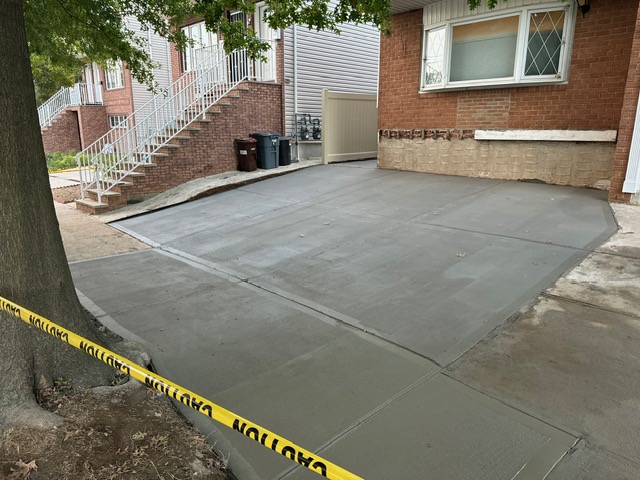
- Sidewalk flags must be at least 4 inches thick (7 inches across driveways) poured with 4,000 PSI air-entrained concrete over compacted RCA gravel.
- Street tree root damage requires coordination with the NYC Parks Department to avoid severe municipal fines.
- Always work with a DCWP-licensed and NYC DOT-bonded contractor to ensure the violation is officially removed from city records.
Navigating NYC DOT Sidewalk Violations on Staten Island
Finding a NYC Department of Transportation (DOT) sidewalk violation notice taped to your front door or arriving in the mail can be stressful. On Staten Island, thousands of homeowners receive sidewalk notices every year due to shifted concrete flags, tree root displacement, or freeze-thaw cracking.
Since 2014, National Design & Contracting Corp has helped hundreds of Staten Island property owners resolve DOT violations, pull required municipal permits, and pour durable, code-compliant concrete sidewalks across Staten Island. Here is what every homeowner needs to know about NYC sidewalk law and your rights.
NYC Administrative Code 7-210: The Law Explained
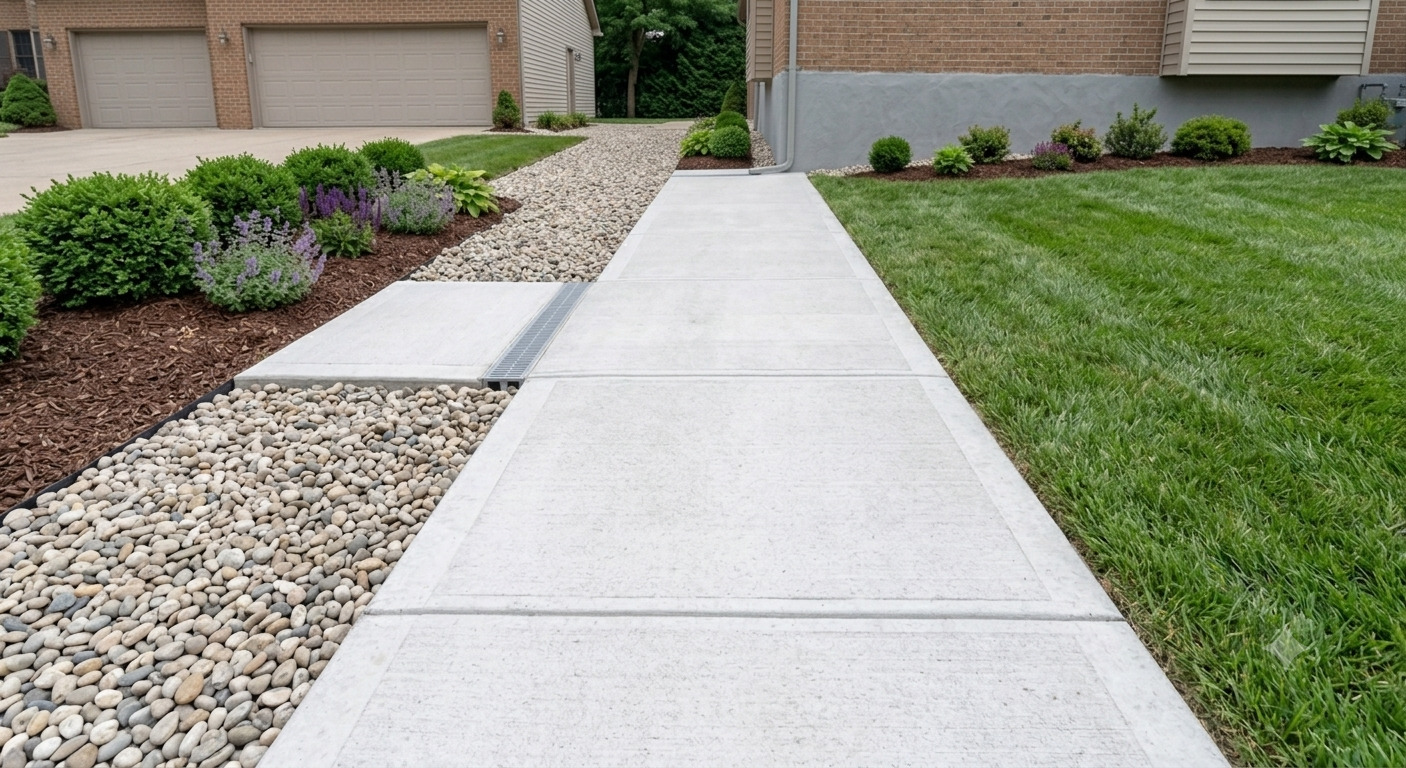
In 2003, New York City enacted Administrative Code 7-210 (commonly known as the Sidewalk Law). This law shifted the legal liability for sidewalk accidents and maintenance from the City of New York directly to the adjacent private property owner.
If someone trips and falls on a cracked or uneven sidewalk flag in front of your home, you can be held directly liable in personal injury litigation. Keeping your concrete flags level, smooth, and compliant is both a legal mandate and an essential risk management step.
The 5 Most Common Sidewalk Defects Cited by NYC DOT
DOT sidewalk inspectors look for specific criteria outlined in the NYC Highway Rules. The five most frequent reasons for violation notices include:
Vertical Displacements (Trip Hazards)
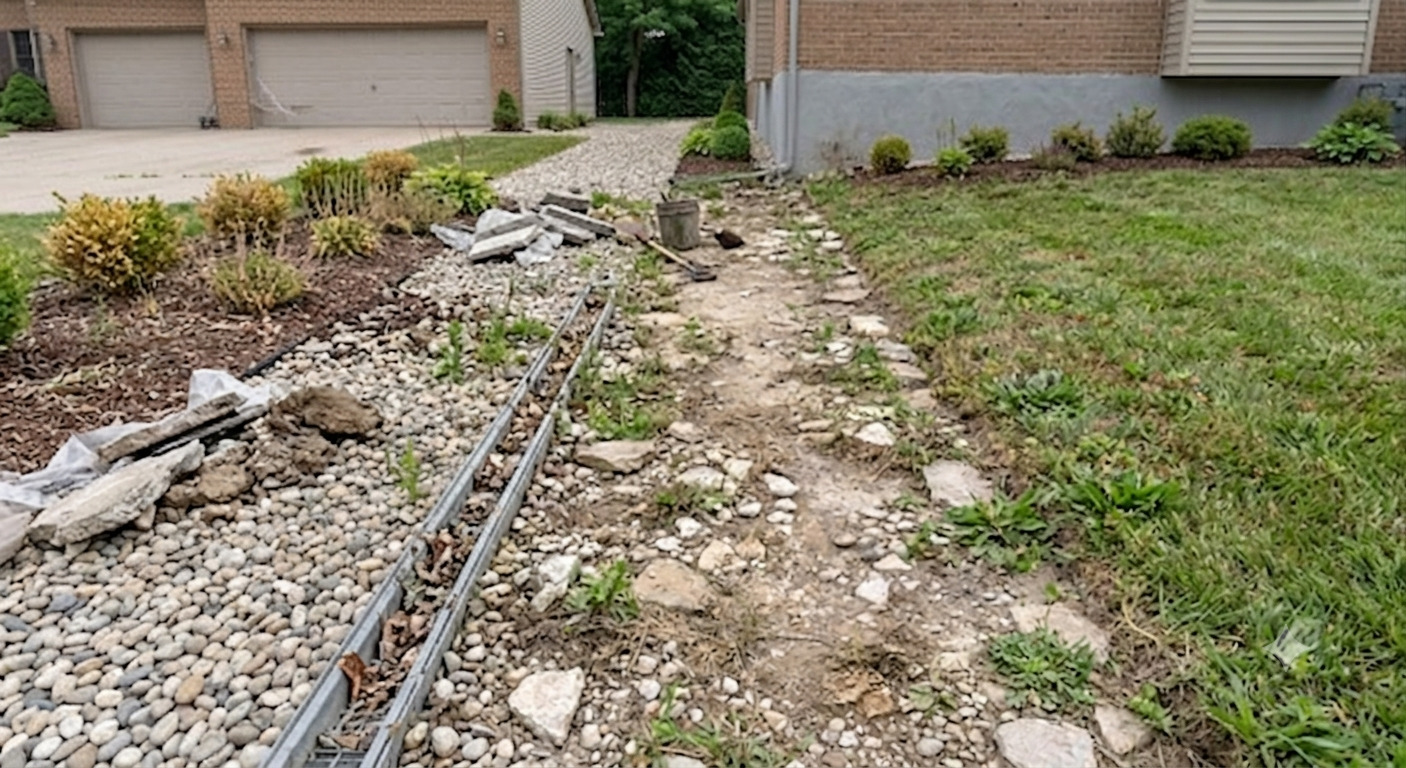
A height differential of 1/2 inch or greater between adjacent sidewalk slabs is considered an immediate trip hazard. This usually occurs when winter frost heave or settling soil lifts one slab while its neighbor remains stationary.
Shattered or Cracked Flags
Severe cross-cracks, spiderweb fractures, or completely missing chunks compromising slab integrity. Water enters these fissures, freezes, and completely pulverizes the concrete within two winters.
Improper Slope or Drainage Ponding
Slabs pitched backward toward the property line rather than draining toward the curb. This creates standing water pools in summer and treacherous black ice sheets during Staten Island freezing snaps.
Missing Slabs or Temporary Asphalt Patches
Slabs patched with temporary cold-patch asphalt or loose gravel rather than permanent 4-inch concrete flags. NYC DOT mandates full-depth concrete slab replacement.
Tree Root Lifting & Canopy Intrusion
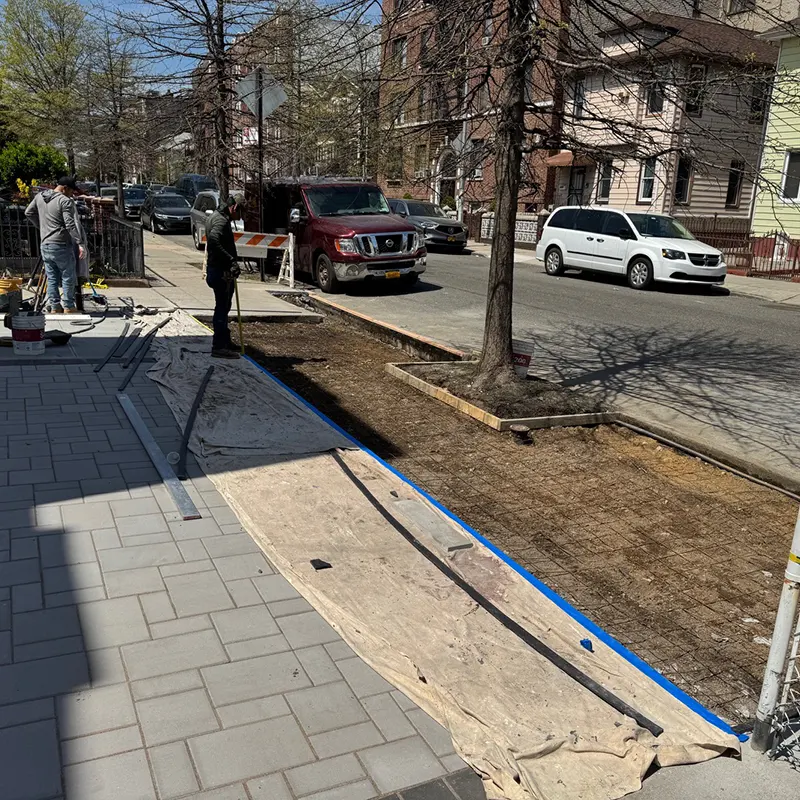
City street trees pushing concrete flags upward into dangerous ramps. Homeowners cannot simply chop roots, as NYC Parks Department trees are heavily protected. We coordinate directly with NYC Parks forestry specialists to safely ramp or bevel flags around roots.
Clear Your Sidewalk Violation with NDCCNY
Do not let a sidewalk notice turn into a city lien or liability risk. Visit our Staten Island concrete sidewalk contractor page. If your project connects to a private driveway or curb apron, our Staten Island concrete contractors can also coordinate your concrete driveway installation. Call Adeel Cheema at (347) 335-5005 for an immediate inspection and clear violation resolution.
Frequently Asked Questions
Who is legally responsible for repairing sidewalks in front of private property in NYC?
What happens if I ignore a NYC DOT Sidewalk Violation Notice?
What do I do if a city street tree has lifted my sidewalk flags?
How is a sidewalk violation officially removed from city records?
Get a Free, Written On-Site Estimate
Speak directly with owner Adeel Cheema about your project. Fully licensed (DCWP #2127843-DCWP), fully insured, and backed by over a decade of local New York craftsmanship. We stand behind our work.