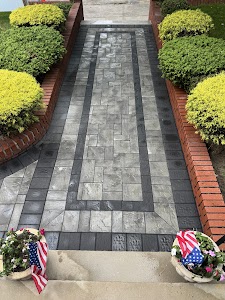
How much does a paver patio cost in Staten Island?
It comes down to the size of the patio, the paver you choose, the base you are starting from, and the pattern. A small concrete-paver patio on clean soil is a modest job. A large bluestone or premium patio that needs old concrete demolished first, with a soldier-course border, is a much bigger one. Because those swings are huge, a real paver contractor prices it after seeing the space. Ask for a free on-site estimate in writing.
Is it cheaper to lay pavers or pour concrete?
Poured concrete is usually cheaper up front. Pavers cost more to install but tend to win over time: a cracked concrete slab has to be broken out and repoured, while a damaged paver can be lifted and swapped in minutes, and pavers do not develop the long cracks that Staten Island freeze-thaw winters put into slabs. If you want the lowest first cost, concrete. If you want the surface that ages better and is easy to repair, pavers.
How long do pavers last?
A properly installed paver surface commonly lasts 25 to 30 years or more, because the base carries the load and individual pavers can be replaced. The lifespan almost always comes down to the base and the joints, not the paver, which is why we do not rush that part.
How thick should the base be under pavers?
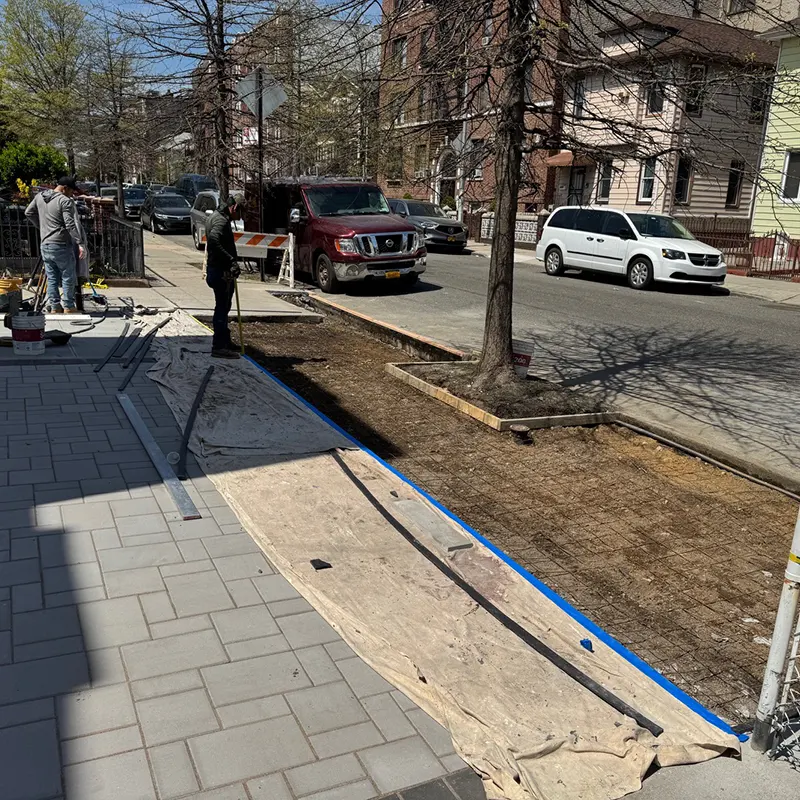
For a patio or walkway, plan on about 6 inches of compacted gravel base. For a driveway that carries vehicles, plan on 8 to 12 inches. Just as important as the depth is compacting it in layers rather than all at once, so it does not settle later.
Why are my pavers sinking or growing weeds?
Sinking almost always means the base was too thin or was not compacted, so the ground settled underneath. Weeds and ants in the joints usually mean regular sand was used instead of polymeric sand, and it washed out. Both are fixable: we lift the affected area, rebuild the base, relay, and re-sand with polymeric sand.
Do paver driveways hold up to car weight in Staten Island?
Yes, when they are built for it. A driveway needs a deeper, well-compacted base than a patio and thicker driveway-rated pavers. Built that way, a paver driveway handles daily vehicle traffic without dipping or rutting.
Do pavers need to be sealed?
Sealing is optional. It deepens the color, makes stains easier to clean, and helps lock the joint sand, but pavers do not require it to last. We can seal on request or leave them natural.
Can you repair a paver job someone else did wrong?
Yes. A lot of our paver work in Staten Island is fixing sunken, heaved, or weed-filled patios and walkways from a rushed install. We rebuild the base, relay the pavers, and re-sand the joints so it stays put this time.
What paver brands do you install?
All the major ones, including Cambridge pavers, so you can pick the style and color you actually want instead of being limited to one supplier's stock.
How long does a paver installation take?
A walkway is often one to two days. A patio usually runs two to four days. A driveway depends on size and base depth. You get a firm timeline in the written estimate before we start.