How much does a paver patio cost in Staten Island?
The main drivers are the square footage, the paver you pick, how much excavation and base the yard needs, whether there are steps or a fire pit or seat walls, and whether drainage has to be corrected. A simple rectangular patio on flat, well-draining ground is a smaller job than a multi-level patio on a slope. We price it after seeing the yard and give a free written estimate.
Are pavers better than a concrete patio?
They solve the problem differently. A poured concrete patio is one solid slab, lower cost, but when it cracks you see the crack across the whole surface and repairs are obvious. Pavers flex with the ground instead of cracking, any single one can be lifted and reset, and the look is more finished. For a backyard living space most Staten Island homeowners want, pavers usually win on looks and repairability. A poured slab wins on up-front cost.
Do paver patios need to be sealed?
Sealing is optional, not required. A sealer can deepen the color, make the surface easier to clean, and help the joint sand stay put, and it needs redoing every few years. Plenty of patios go unsealed and hold up fine. We will tell you honestly whether sealing is worth it for the pavers you choose.
How do I stop weeds from growing between my pavers?
Weeds in paver joints come from seeds landing in the joint sand from above, not up through the base. Polymeric joint sand, which hardens after it is set, is the main defense, along with keeping the joints full. It slows weeds and ants a lot. The occasional weed that still takes root pulls out easily.
Can pavers be laid over an existing concrete patio?
Sometimes, if the concrete is sound and drains well, pavers can be set over it, but it raises the finished height, which can create steps or door-clearance problems, and any movement in the old slab telegraphs up. More often the better long-term result is to remove the old concrete and build a proper paver base. We will look at your slab and give you the straight answer.
How long does it take to install a paver patio?
A typical residential paver patio runs a few days to about a week, depending on the size, the amount of excavation, and extras like steps, seat walls, or drainage. Weather during the build can move it. We give you a realistic timeline in the estimate, not a rushed one.
What is the best paver for a patio?
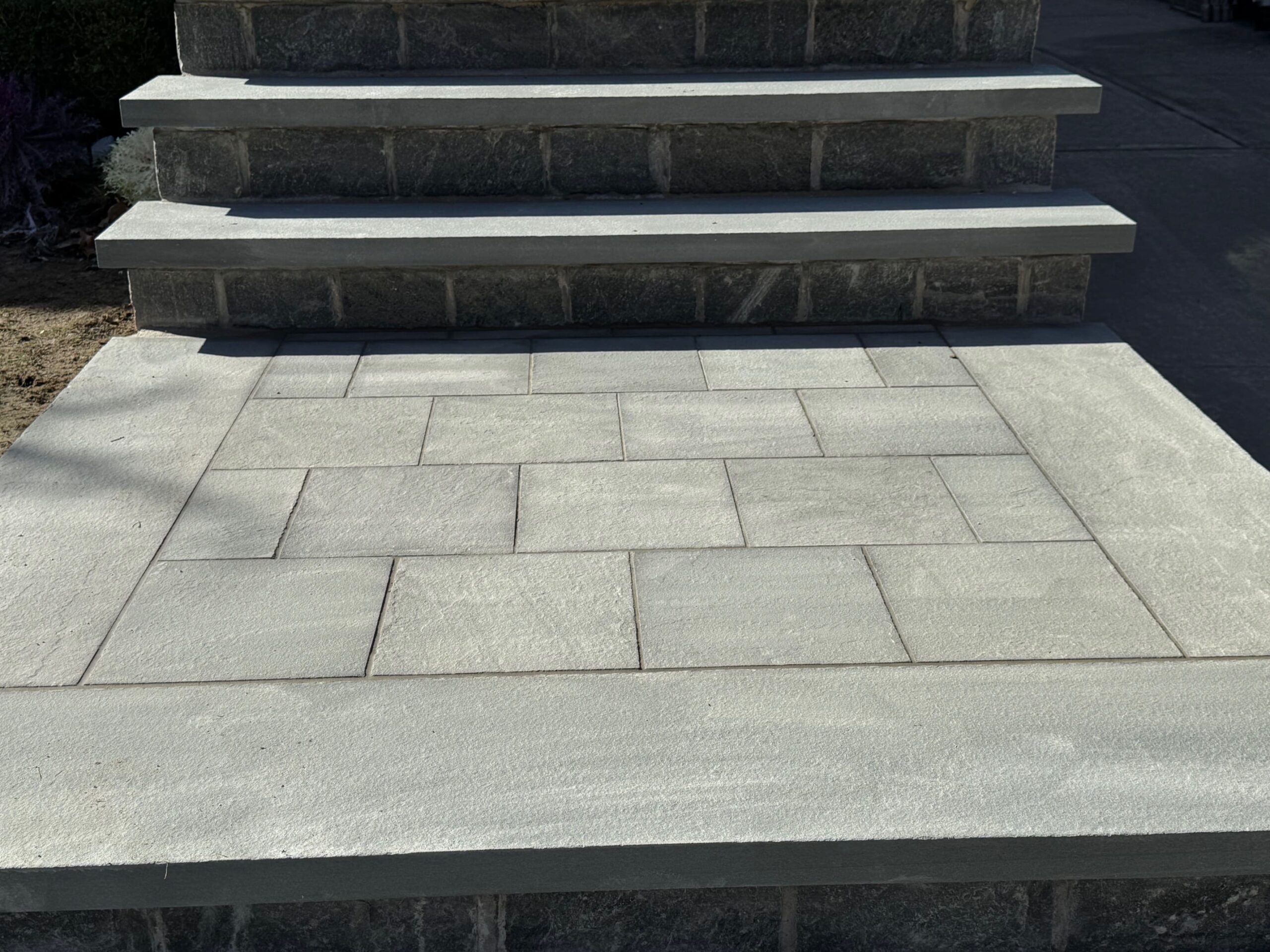
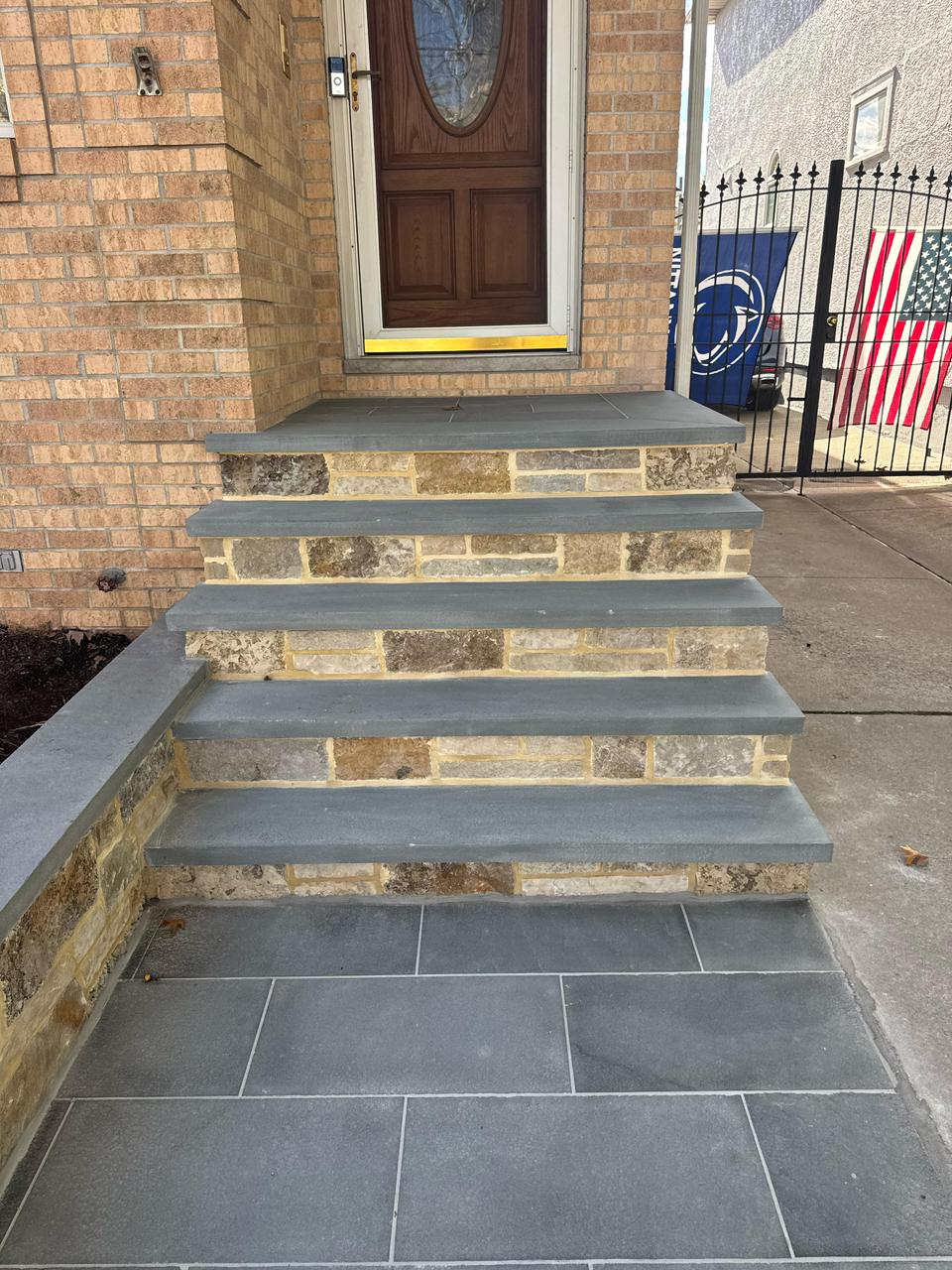
There is no single best one. Concrete pavers give you the widest range of shapes, colors, and price points and are the common choice. Clay brick pavers hold their color and suit traditional homes. Natural stone like bluestone is the premium look. The right pick depends on your house, your budget, and how the patio will be used, and we help you match it.
Will a paver patio hold up to Staten Island winters?
Yes, when it is built on a proper draining base. The thing that wrecks patios in winter is water trapped under the pavers freezing and heaving them. A compacted gravel base that drains gives the water somewhere to go, so freeze-thaw stops being a problem. This is why we do not shortcut the base.